Mastering the ESP32:A Complete Guide for IoT and Smart Electronics
Introduction
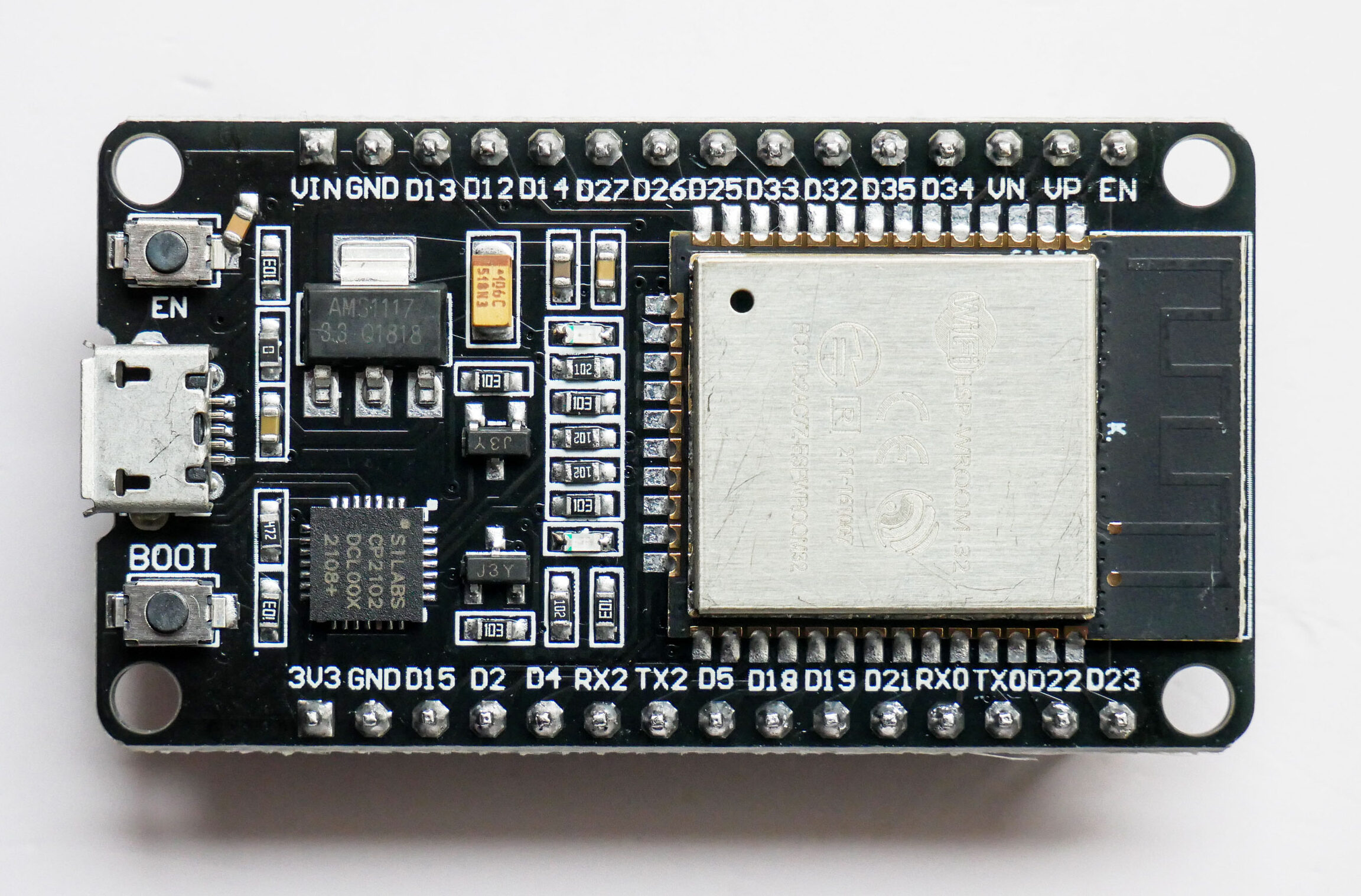
The ESP32 microcontroller is one of the most powerful and widely used microcontrollers in modern electronics and Internet of Things (IoT) development. It is designed by Espressif Systems and is known for its built-in Wi-Fi, Bluetooth, high processing power, and low energy consumption.
ESP32 has become extremely popular among electronics engineers, students, robotics developers, and IoT innovators because it allows developers to build smart devices, automation systems, wireless sensors, and advanced robotics projects at a very low cost.
Compared to traditional microcontrollers like Arduino Uno or ESP8266 microcontroller, ESP32 offers significantly more features, faster performance, and greater connectivity options.
What is ESP32?
ESP32 is a low-cost, low-power system-on-chip (SoC) microcontroller that integrates Wi-Fi and Bluetooth connectivity. It is mainly designed for Internet of Things (IoT) applications where devices need to communicate wirelessly.
The ESP32 chip contains:
Dual-core processor
Built-in Wi-Fi
Built-in Bluetooth
Multiple GPIO pins
Analog and digital interfaces
Hardware security features
High processing speed
Because of these capabilities, ESP32 can be used to build smart home devices, robotics systems, wireless sensors, wearable devices, and industrial automation systems.
Key Features of ESP32
The ESP32 microcontroller offers many advanced features that make it superior to many other microcontrollers.
1. Dual-Core Processor
ESP32 contains a dual-core Tensilica Xtensa LX6 processor that can run up to 240 MHz. This allows the microcontroller to perform multiple tasks simultaneously, making it ideal for complex embedded systems.
2. Built-in Wi-Fi
ESP32 has integrated 802.11 b/g/n Wi-Fi, allowing devices to connect directly to the internet without external modules.
This feature makes ESP32 perfect for:
IoT devices
Smart home systems
Remote monitoring
Cloud-connected sensors
3. Bluetooth and BLE Support
ESP32 supports both:
Classic Bluetooth
Bluetooth Low Energy (BLE)
This enables wireless communication with smartphones, laptops, and other Bluetooth devices.
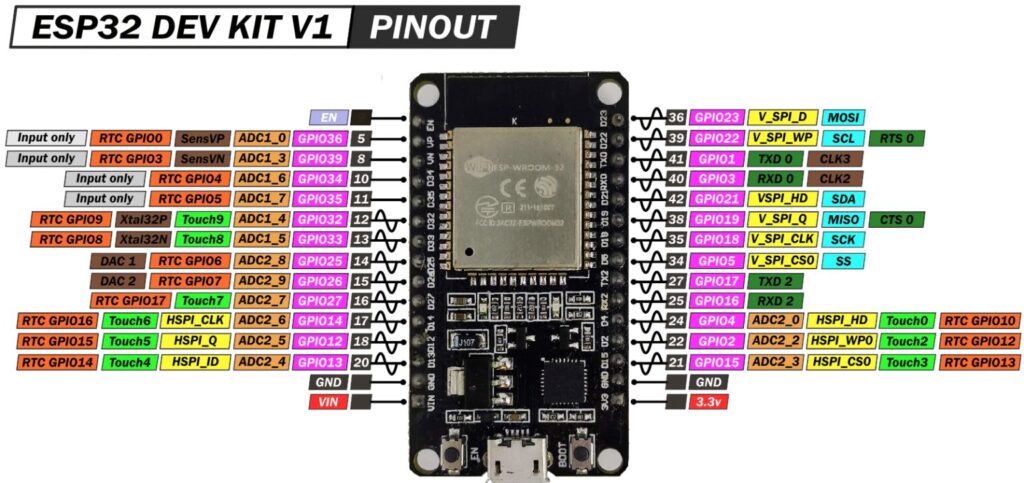
4. Large Number of GPIO Pins
ESP32 provides up to 34 General Purpose Input/Output (GPIO) pins, which can be used to connect sensors, motors, displays, LEDs, and many other electronic components.
5. Analog to Digital Converter (ADC)
ESP32 includes multiple 12-bit ADC channels, allowing it to read analog signals from sensors such as:
Temperature sensors
Light sensors
Gas sensors
Pressure sensors
6. Digital to Analog Converter (DAC)
The microcontroller also contains DAC outputs, allowing it to generate analog voltage signals.
7. PWM Support
ESP32 supports Pulse Width Modulation (PWM) which is useful for:
Motor control
LED brightness control
Servo motor control
8. Multiple Communication Protocols
ESP32 supports several communication interfaces including:
I2C
SPI
UART
CAN
I2S
These protocols allow easy communication with displays, sensors, memory modules, and other microcontrollers.