1. Introduction to Raspberry Pi 5
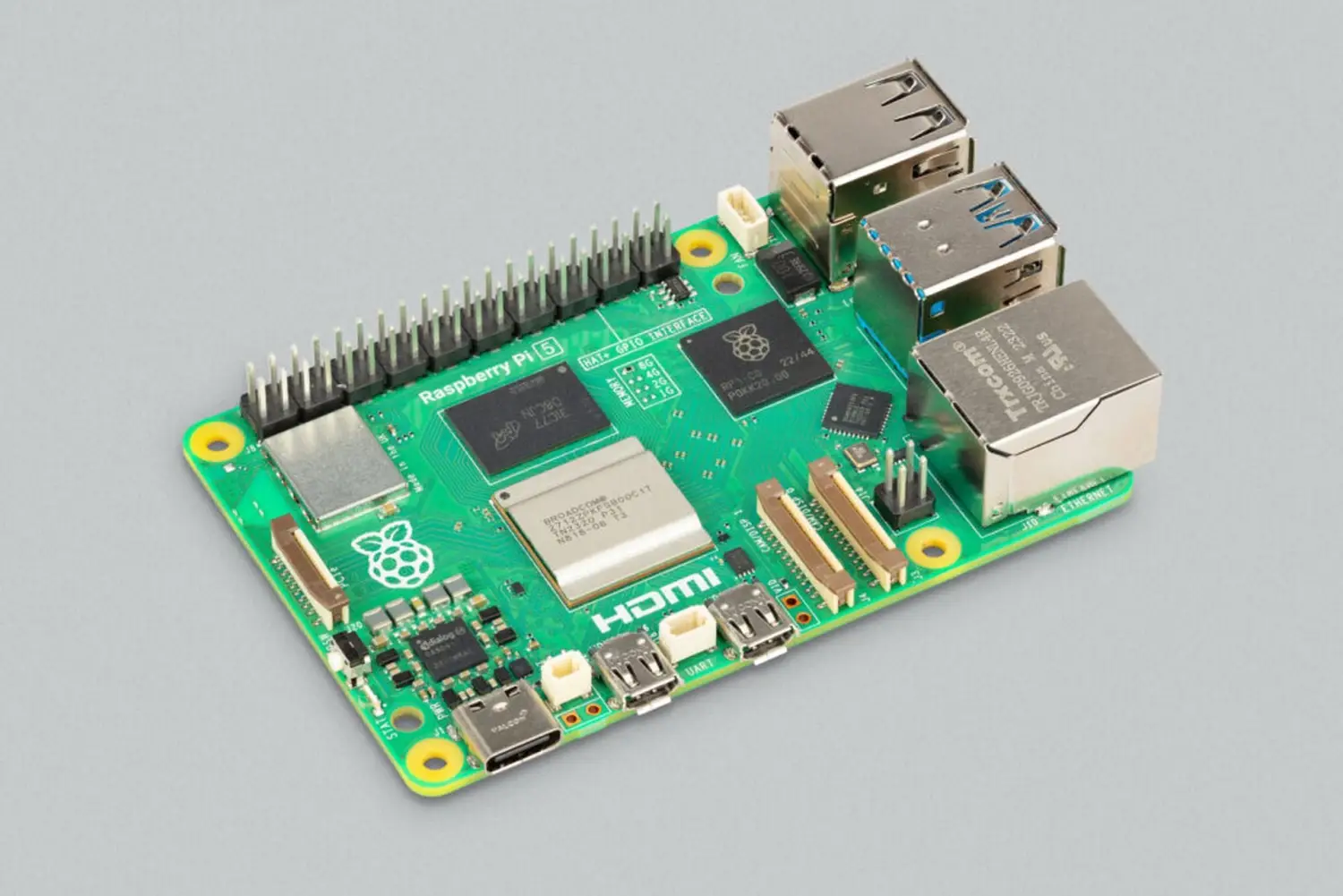
The Raspberry Pi 5 is a small but powerful single-board computer (SBC) designed for developers, students, engineers, and hobbyists.
It can be used for:
-
Robotics projects
-
Embedded systems
-
IoT devices
-
AI and machine learning experiments
-
Smart home systems
-
Desktop computing
-
Programming learning (Python, C, etc.)
Compared to older models, Raspberry Pi 5 provides 2–3× higher performance, making it suitable for more advanced applications.
2. Raspberry Pi 5 Main Specifications
Here are the key technical specifications of the Raspberry Pi 5.
Processor (CPU)
GPU
-
VideoCore VII GPU
-
Supports OpenGL ES 3.1
-
Dual 4K display output
RAM Options
Connectivity
-
Dual-band Wi-Fi
-
Bluetooth 5.0 / BLE
-
Gigabit Ethernet
USB Ports
Display
-
Dual HDMI ports
-
Supports two 4K monitors
Storage
Power
6. PCIe Support for SSD
For the first time, Raspberry Pi 5 includes a PCIe 2.0 interface.
Benefits of PCIe
-
Allows connection of NVMe SSD storage
-
Much faster than MicroSD cards
-
Faster operating system boot time
-
Better performance for databases and servers
This feature allows Raspberry Pi 5 to work more like a real desktop computer.
7. Camera and Display Support
Raspberry Pi 5 includes two MIPI connectors for cameras and displays.
You can connect:
-
Raspberry Pi cameras
-
Touch displays
-
Computer vision modules
This is especially useful for:
8. Cooling and Power Improvements
Because Raspberry Pi 5 is more powerful, it produces more heat.
Recommended cooling options:
Power requirement:
Using the correct power supply ensures stable performance.
9. Raspberry Pi 5 vs Raspberry Pi 4
| Feature |
Raspberry Pi 4 |
Raspberry Pi 5 |
| CPU |
Cortex-A72 |
Cortex-A76 |
| Clock Speed |
1.5 GHz |
2.4 GHz |
| Performance |
Good |
2–3× Faster |
| GPU |
VideoCore VI |
VideoCore VII |
| PCIe |
No |
Yes |
| I/O Controller |
Integrated |
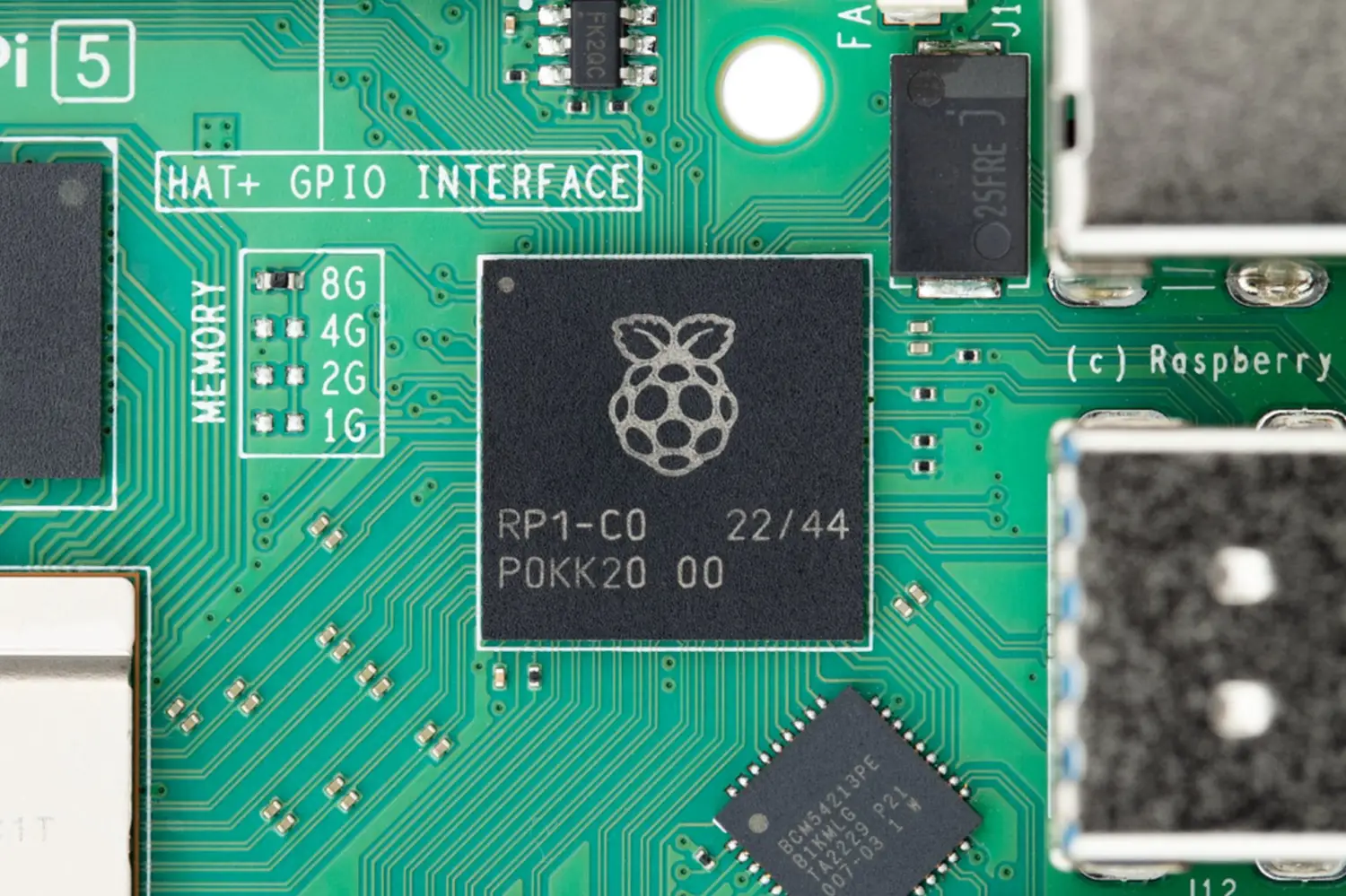
RP1 Chip |
Overall, Raspberry Pi 5 offers significantly better performance and expandability.
10. Applications of Raspberry Pi 5
Raspberry Pi 5 can be used in many modern technology projects:
Robotics
-
Autonomous robots
-
Robotic arms
-
Vision-based robots
Internet of Things (IoT)
-
Smart home automation
-
Environmental monitoring
-
Remote device control
Artificial Intelligence
-
Object detection
-
Image recognition
-
Edge AI applications
Education
-
Learning programming
-
Electronics experiments
-
STEM projects
11. Advantages of Raspberry Pi 5
Key benefits include:
-
High performance processor
-
Dual 4K display support
-
PCIe SSD connectivity
-
Faster USB and networking
-
Better graphics performance
-
Powerful for robotics and AI
These features make Raspberry Pi 5 one of the best single-board computers available today.
12. Conclusion
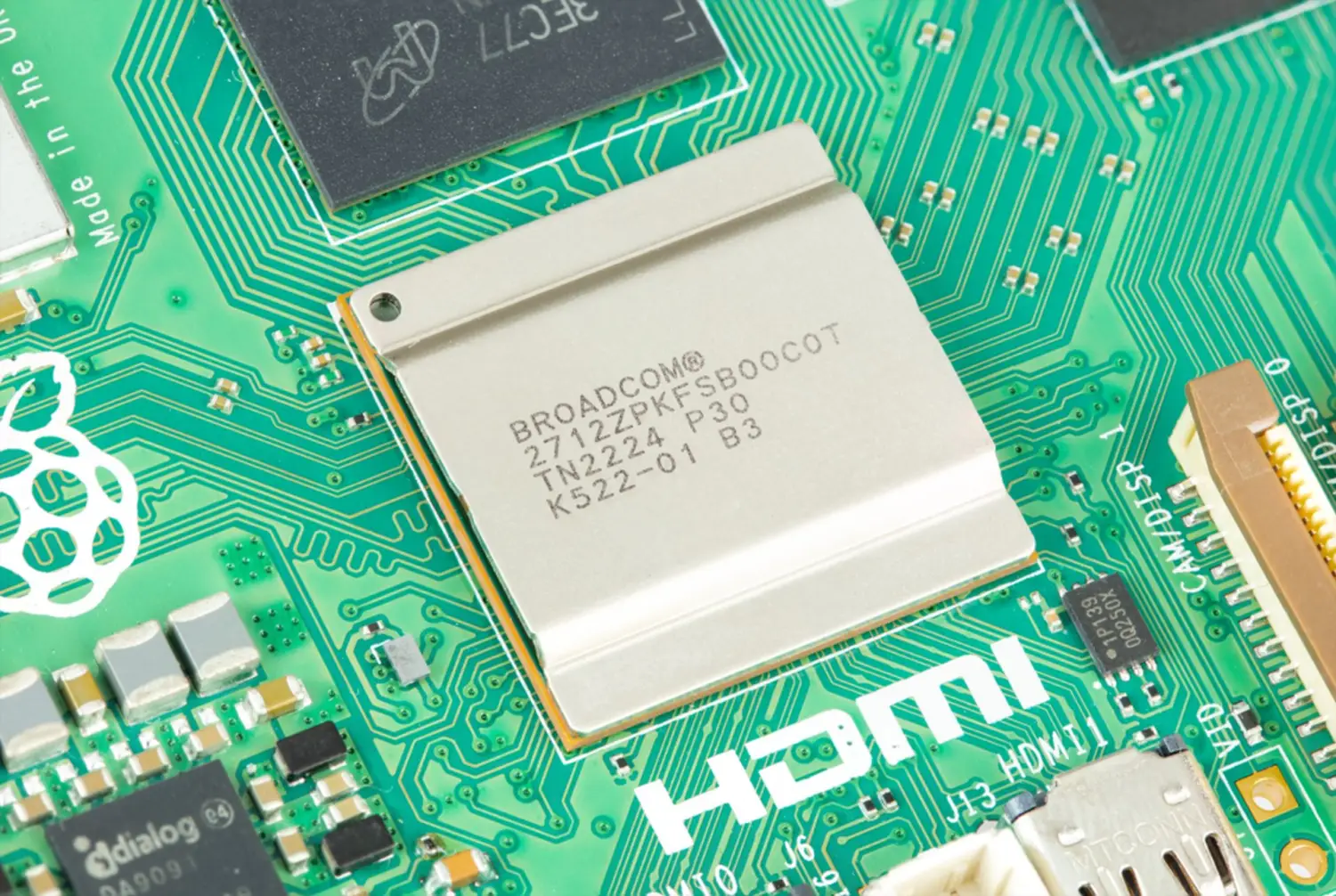
The Raspberry Pi 5 represents a major upgrade in the Raspberry Pi ecosystem. With its BCM2712 processor, RP1 I/O controller, faster graphics, and PCIe support, it delivers desktop-level performance in a small and affordable board.
Whether you are a student, electronics hobbyist, robotics developer, or IoT engineer, Raspberry Pi 5 provides the power and flexibility needed to build advanced technology projects.
It is an excellent platform for learning, innovation, and building real-world embedded systems.