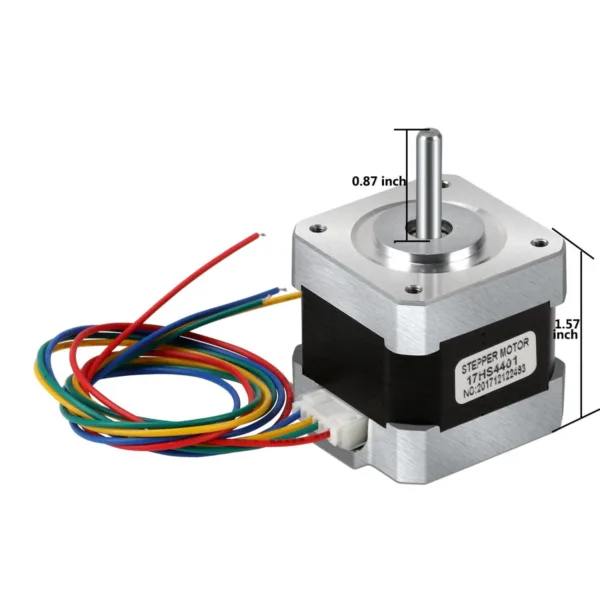
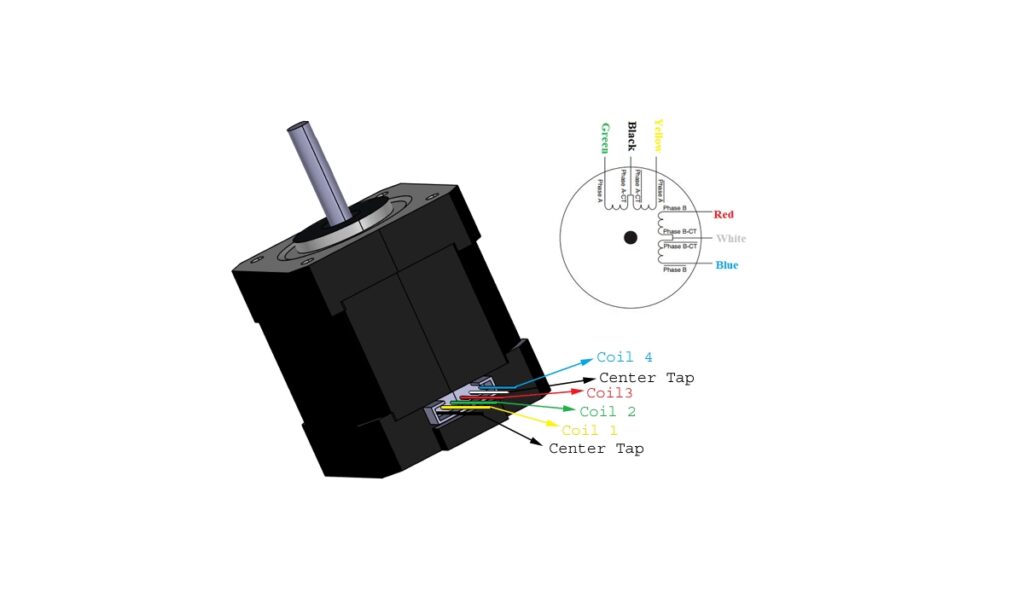
What is a NEMA Stepper Motor?
A NEMA stepper motor is a type of brushless DC motor that moves in precise steps instead of continuous rotation. The term NEMA stands for National Electrical Manufacturers Association, which defines the standard size and mounting dimensions of the motor.
This means that the NEMA number does not represent power, but rather the physical size of the motor faceplate.
For example:
-
NEMA 17 → 1.7 × 1.7 inches faceplate
-
NEMA 23 → 2.3 × 2.3 inches faceplate
-
NEMA 34 → 3.4 × 3.4 inches faceplate
These motors are commonly used in precision motion control systems where accurate positioning is required.
How a Stepper Motor Works
A stepper motor works by converting electrical pulses into mechanical movement.
Inside the motor there are:
When electrical pulses are sent to the coils in a specific sequence:
-
One coil is energized.
-
The rotor aligns with the magnetic field.
-
Another coil energizes.
-
The rotor moves slightly to the next position.
Each electrical pulse moves the motor one fixed step.
Example:
Main Features of NEMA Stepper Motors
NEMA stepper motors offer several important features that make them ideal for precision applications.
High Position Accuracy
Stepper motors move in precise steps, allowing accurate control of position without needing complex feedback systems.
Open Loop Control
They can operate in open-loop systems, meaning no encoder is required to track position.
High Holding Torque
Stepper motors can hold their position firmly when powered, which is useful for robotics and CNC machines.
Easy Digital Control
They can be easily controlled with microcontrollers such as Arduino, ESP32, Raspberry Pi, and PLCs.
Reliable and Durable
Since they are brushless motors, they require very little maintenance.